Multi-million-dollar investment in facility infrastructure, quality management, and enterprise systems positions Kincell Bio to support an increasing number of clients preparing for commercialization and to meet growing market demand in the cell therapy sector.
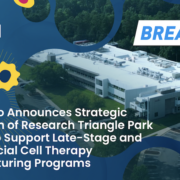
Research Triangle Park, NC — April 14, 2026 — Kincell Bio, a leading contract development and manufacturing organization (CDMO) supporting autologous and allogeneic cell therapy programs, today announced a significant strategic investment to expand and strengthen its Research Triangle Park (RTP), North Carolina, facility. The expansion reinforces Kincell Bio’s commitment to supporting clients as they advance from late-stage clinical CMC development through commercialization and post-approval life cycle management.
Expanding Capacity to Meet the Demands of a Maturing Industry
The RTP facility serves as Kincell Bio’s center of excellence for pivotal supply, commercialization, and commercial manufacturing, complementing its early-phase focused facility in Gainesville, Florida. The RTP site currently houses four ISO 7 cleanroom suites, and the expansion will enable the addition of two more suites, meaningfully increasing the facility’s capacity to support both autologous and allogeneic cell therapy programs at commercial scale.
“This expansion reflects our commitment to supporting our clients’ commercial success and our confidence in the trajectory of the overall cell therapy industry,” commented Larry Pitcher, Chief Executive Officer of Kincell Bio. “A number of our clients are preparing for commercialization, and these investments will ensure that our infrastructure is ready to support them at every stage of that journey.”
The build-out includes a comprehensive suite of supporting infrastructure designed to meet the rigorous demands of late-stage and commercial programs:
- Additional QC Laboratory to support expanded quality control testing across a growing client portfolio
- MSAT/ASAT Laboratory purpose-built to support later-stage process characterization, process validation, method validation, and technology transfer activities
- Microbiology Laboratory equipped for rapid sterility testing, accelerating critical release timelines for autologous therapies, while also supporting allogeneic products.
- Expanded GMP Warehouse providing significantly increased storage capacity to support growing late-phase clinical development and commercial supply needs
- Administrative Expansion workspaces for over 100 team members, supporting our growing organization
The expanded facility is projected to be fully operational by the end of the third quarter of 2026.
Investing in Systems That Scale
Alongside the physical build-out, Kincell Bio is making complementary investments in the digital infrastructure required to support commercial-stage operations. Further investment in the organization’s Veeva quality management system will further streamline quality operations, enhance end-to-end visibility and control, and provide the scalability necessary as an increasing number of cell therapy products advance toward and enter the commercial market. Additionally, investment in the company’s enterprise resource planning (ERP) system will support end-to-end program and product management, ensuring operational efficiency keeps pace with growing client demand.
“Cell therapy demands the best in science, process execution, and partnership,” shared Bruce Thompson, PhD, President and Chief Technology Officer. “This expansion is a direct expression of our commitment to staying at the forefront of analytical technologies, process development, and manufacturing operations. We are strengthening the infrastructure today that will deliver transformative therapies to patients tomorrow.”
About Kincell Bio
Kincell Bio engineers cells into therapies. With manufacturing facilities located in Research Triangle Park, NC, and Gainesville, FL, Kincell Bio is a contract development and manufacturing organization (CDMO) with the mission to streamline CMC development, with expertise in analytical and process development and GMP manufacturing, testing, and release from early clinical, to pivotal studies and product launch. Kincell Bio is focused on supporting innovative companies developing immune cell therapies, including autologous and allogeneic CAR-T, TCRs, Tregs, and CAR-NK programs, and on developing expertise in stem cell products and iPSCs.
For more information, visit www.kincellbio.com, and follow us on LinkedIn.
Media Contact:
Stewart McNaull, PhD
Chief Commercial Officer
Kincell Bio, Inc.
Email: stewart.mcnaull233@kincellbio.com