• Services
        • Our Cell Therapy CDMO Services

        • CMC Roadmap & Development

          Concept to IND through a structured CMC strategy

        • Early & Late Phase Process Development

          Risk-based strategies from early feasibility to commercialization

        • Analytical Development & Methods

          Identity, potency, and safety data you can trust

        • Clinical & Commercial GMP Manufacturing

          GMP manufacturing in PAI-ready facilities

        • Characterization & Release Testing

          The backbone of a reliable cell therapy control strategy

        • Transfer In Playbook

          Structured tech transfer playbook ensures smooth program transitions

  • Phases Supported
        • Phase Supported

        • Early-Phase Acceleration

          Balancing speed to the clinic with late-phase success

        • Late-Phase Development

          Aligning processes, analytics, and quality for compliance

        • Commercialization & Commercial Supply

          Rigorous quality and resilient supply strategy

  • Modalities
        • Modalities Supported

        • Autologous Cell Therapies

          One batch, one patient, one uninterrupted chain of identity

        • Allogenic Cell Therapies

          Scalable treatments to reach large patient populations

  • Quality & Regulatory
        • Quality & Regulatory

        • Quality Culture & Regulatory Support

          Quality and inspection readiness are embedded in our culture

        • PAI Readiness Program

          PAI readiness is built into everyday operations

  • About
        • About Kincell

        • Why Kincell

          Quality first, right scale, better science, reliable supply, and personalized service

        • Leadership Team

          Translating breakthrough science into reliable commercial supply

        • Facilities

          Early-phase through commercial production with flexibility, control, and quality

  • Events & Insights
        • Events & Insights

        • Events

          Stay up-to-date with the latest from Kincell

        • News & Expert Insights

          Articles, press releases, webinars, posters, videos, and more

  • Careers
  • Menu Menu
  • Search Icon
  • Careers
Contact Us

Tag Archive for: cell therapy

August 3, 2026

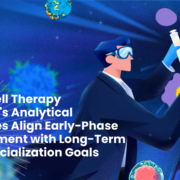
As cell therapies advance from early development toward commercialization, Chemistry, Manufacturing, and Controls (CMC) strategy has become a critical determinant of regulatory and clinical success. A proactive, evolving CMC roadmap can help sponsors anticipate regulatory expectations, reduce manufacturing risk, and avoid costly delays throughout development.

In this featured article published by Cell & Gene Therapy Review, Roger Herr, PhD, explores the most common CMC pitfalls facing today’s cell therapy developers and shares practical strategies for building a dynamic roadmap that supports scalable manufacturing, regulatory readiness, and long-term program success.

Whether you’re preparing for your first IND or planning for commercial manufacturing, this article provides valuable insights into developing a robust CMC strategy that helps keep your program on track.

Read the full article to learn how early CMC planning can help accelerate development while minimizing regulatory and manufacturing risk.

Read the Full Article

https://kincellbio.com/wp-content/uploads/2026/07/2026071420CGTR20Article.jpg 1080 1920 yiyi /wp-content/uploads/2026/03/logo_full-1.svg yiyi2026-08-03 15:28:442026-08-03 15:28:48Avoiding CMC Pitfalls: Keep Cell Therapy Programs on Track
July 16, 2026

While the curative potential of cell therapies is incredible, the path from a promising candidate in the lab to an approved therapy in the clinic is extraordinarily complex. However, the majority of programs that complete the journey successfully share one thing in common: they planned for commercial success from the very beginning.

At the center of that planning is a Chemistry, Manufacturing, and Controls (CMC) roadmap. More than a regulatory document, an effective CMC roadmap is a strategic framework that guides every critical decision across a cell therapy program’s lifecycle. It anticipates risks before they become crises, aligns process and analytical development with long-term commercialization goals, and ensures that every milestone is built on a foundation strong enough to support the next phase.

Elements of an Effective CMC Roadmap

A results-driven CMC roadmap does several things simultaneously. It delineates IND and BLA timelines, including submission milestones, provides a cost overview, and evolves as the program advances from early- to late-phase clinical development and ultimately to commercialization. It is not a static document; rather, it is a living strategy that matures alongside the therapy it supports.

Building a successful CMC roadmap begins with defining the target product profile, or TPP. Understanding the therapeutic indication and patient population, clinical efficacy goals, safety profile, route of administration, dosage, quality requirements, formulation, and storage and transportation needs ensures that the critical quality attributes selected genuinely reflect and support clinical performance expectations. From there, the best analytical methods to robustly link those attributes to the TPP must be identified to enable more informed decision-making and help developers avoid the costly delays caused by rework and comparability studies later in development.

Risk identification and mitigation must be woven throughout the roadmap from the outset. The highest risks in cell therapy development typically relate to manufacturability, variability in raw materials, variability in cell sources, and insufficient early process characterization. Early-stage decisions directly impact the feasibility of scaling to commercial production, which is why manufacturability assessments early in the CMC roadmap are essential as they flag potential scaling bottlenecks and other challenges before they become existential threats. Evaluating the availability of key reagents and donor material, and establishing clear approaches to chain of identity and chain of custody for patient-derived material, allows teams to develop supply chain, donor screening, and process development strategies that manage risk proactively rather than reactively.

Engaging regulators early through pre-IND meetings is one of the most effective risk-reduction tools available to cell therapy developers. These conversations give sponsors the opportunity to validate their CMC strategy before committing significant resources, secure regulatory alignment on key analytical and manufacturing decisions, and surface any concerns around raw material sourcing, comparability protocols, or assay qualification approaches while there is still room to course-correct. Equally important, they allow both parties to establish shared expectations and concrete phase-based milestones,  bringing structure and predictability to the development process. For programs operating under expedited timelines, this clarity is not a luxury; it is a competitive advantage.

Stage Gates: Structured Decision-Making Across the Development Lifecycle

Risk management in cell therapy development is not a single event. It is a discipline sustained across every phase through structured milestones and stage gates. Approaching development as a series of milestones, with mitigation strategies defined as part of the product development lifecycle, enables teams to simplify decision-making, proactively address uncertainties, and continuously align early development with long-term commercialization goals.

Stage gates allow for careful evaluation of cost, time, and quality tradeoffs at each critical juncture, ensuring that decisions are thoughtful and grounded in data rather than made under pressure. Tools such as well-designed Design of Experiments (DoE) studies, phase-appropriate analytical control strategies, and careful evaluations of sequential versus parallel processes streamline early development and ensure smoother transitions through each stage.

Characterization is equally important in this framework and should be considered no less critical than release testing. Investing in characterization assays that interrogate aspects of the product beyond those explicitly required for regulatory compliance deepens process understanding, informs relevant risk assessments, and ensures that specifications taken into late-stage development are genuinely appropriate for the product.

Building the Roadmap with the Right Partner

Success requires sufficient expertise across cell therapy process scaling, raw material sourcing, process and analytical development, GMP manufacturing, and regulatory compliance. When built correctly and supported by the right partner, a CMC roadmap accelerates a program, ensures high product quality, future-proofs regulatory submissions, and minimizes costly surprises.

At Kincell Bio, CMC roadmap development begins by mapping critical quality attributes and designing robust manufacturing processes well in advance of pivotal trials, and integrating process science, quality systems, and regulatory strategy from day one. By front-loading this work, we not only expedite the submission review process but also help clients avoid the costly facility retrofits and process overhauls.

The CMC roadmaps Kincell Bio builds with its clients establish clear, practical paths for the consistent manufacturing of cell therapy candidates that meet safety, identity, quality, purity, and potency standards, while saving time, reducing costs, and reducing risk at every stage of development. To discuss how Kincell Bio would build a CMC roadmap for your program, please contact us.
https://kincellbio.com/wp-content/uploads/2026/07/CMC20Roadmap20-20Thumbnail2020Image.jpg 1080 1920 yiyi /wp-content/uploads/2026/03/logo_full-1.svg yiyi2026-07-16 13:33:292026-07-16 13:33:31Why a Strong CMC Roadmap Is Essential for Cell Therapy Program Success
July 6, 2026

Why analytical development is one of the most important and often overlooked foundations of a successful cell therapy program.

As cell therapies advance from discovery through clinical development and commercialization, analytical development plays a critical role in ensuring product quality, process understanding, regulatory readiness, and long-term manufacturing success.

In this article published by Contract Pharma, Roger Herr, PhD, Director, Analytical Development, and Patrick Kellish, PhD, Senior Scientist, Analytical Development at Kincell Bio, explore why analytical strategies should be established early and how a robust analytical framework can help developers navigate variability, support comparability, and build scalable cell therapy processes.

Read the full article to learn how a science-driven approach to analytical development can help set cell therapy programs up for success from the start.

Read the Article

https://kincellbio.com/wp-content/uploads/2026/07/2026070720Contract20Pharma20Article-1030x579-1.webp 449 800 yiyi /wp-content/uploads/2026/03/logo_full-1.svg yiyi2026-07-06 10:27:102026-07-06 13:56:32Building Cell Therapy the Right Way
April 14, 2026

Multi-million-dollar investment in facility infrastructure, quality management, and enterprise systems positions Kincell Bio to support an increasing number of clients preparing for commercialization and to meet growing market demand in the cell therapy sector.

Research Triangle Park, NC — April 14, 2026 — Kincell Bio, a leading contract development and manufacturing organization (CDMO) supporting autologous and allogeneic cell therapy programs, today announced a significant strategic investment to expand and strengthen its Research Triangle Park (RTP), North Carolina, facility. The expansion reinforces Kincell Bio’s commitment to supporting clients as they advance from late-stage clinical CMC development through commercialization and post-approval life cycle management.

Expanding Capacity to Meet the Demands of a Maturing Industry

The RTP facility serves as Kincell Bio’s center of excellence for pivotal supply, commercialization, and commercial manufacturing, complementing its early-phase focused facility in Gainesville, Florida. The RTP site currently houses four ISO 7 cleanroom suites, and the expansion will enable the addition of two more suites, meaningfully increasing the facility’s capacity to support both autologous and allogeneic cell therapy programs at commercial scale.

“This expansion reflects our commitment to supporting our clients’ commercial success and our confidence in the trajectory of the overall cell therapy industry,” commented Larry Pitcher, Chief Executive Officer of Kincell Bio. “A number of our clients are preparing for commercialization, and these investments will ensure that our infrastructure is ready to support them at every stage of that journey.”

The build-out includes a comprehensive suite of supporting infrastructure designed to meet the rigorous demands of late-stage and commercial programs:

  • Additional QC Laboratory to support expanded quality control testing across a growing client portfolio
  • MSAT/ASAT Laboratory purpose-built to support later-stage process characterization, process validation, method validation, and technology transfer activities
  • Microbiology Laboratory equipped for rapid sterility testing, accelerating critical release timelines for autologous therapies, while also supporting allogeneic products.
  • Expanded GMP Warehouse providing significantly increased storage capacity to support growing late-phase clinical development and commercial supply needs
  • Administrative Expansion workspaces for over 100 team members, supporting our growing organization

The expanded facility is projected to be fully operational by the end of the third quarter of 2026.

Investing in Systems That Scale

Alongside the physical build-out, Kincell Bio is making complementary investments in the digital infrastructure required to support commercial-stage operations. Further investment in the organization’s Veeva quality management system will further streamline quality operations, enhance end-to-end visibility and control, and provide the scalability necessary as an increasing number of cell therapy products advance toward and enter the commercial market. Additionally, investment in the company’s enterprise resource planning (ERP) system will support end-to-end program and product management, ensuring operational efficiency keeps pace with growing client demand.

“Cell therapy demands the best in science, process execution, and partnership,” shared Bruce Thompson, PhD, President and Chief Technology Officer. “This expansion is a direct expression of our commitment to staying at the forefront of analytical technologies, process development, and manufacturing operations. We are strengthening the infrastructure today that will deliver transformative therapies to patients tomorrow.”

About Kincell Bio

Kincell Bio engineers cells into therapies. With manufacturing facilities located in Research Triangle Park, NC, and Gainesville, FL, Kincell Bio is a contract development and manufacturing organization (CDMO) with the mission to streamline CMC development, with expertise in analytical and process development and GMP manufacturing, testing, and release from early clinical, to pivotal studies and product launch. Kincell Bio is focused on supporting innovative companies developing immune cell therapies, including autologous and allogeneic CAR-T, TCRs, Tregs, and CAR-NK programs, and on developing expertise in stem cell products and iPSCs.

For more information, visit www.kincellbio.com, and follow us on LinkedIn.

Media Contact:

Stewart McNaull, PhD
Chief Commercial Officer
Kincell Bio, Inc.
Email: stewart.mcnaull233@kincellbio.com

https://kincellbio.com/wp-content/uploads/2026/05/20260414_Site_Expansion1.png 446 804 raincastle /wp-content/uploads/2026/03/logo_full-1.svg raincastle2026-04-14 13:10:202026-06-22 09:08:06Kincell Bio Announces Strategic Expansion of Research Triangle Park Facility to Support Late-Stage and Commercial Cell Therapy Manufacturing Programs
February 10, 2026

Research Triangle Park, NC — Kincell Bio, a leading U.S. cell therapy contract development and manufacturing organization (CDMO), today announced a new collaboration with RegCell, a biotechnology company developing first‑in‑class immune tolerance platform based on epigenetically reprogrammed regulatory T cells (Tregs). Under the partnership, Kincell Bio will provide comprehensive CMC development and GMP manufacturing support to accelerate RegCell’s lead Treg program toward clinical trial evaluation.

As part of the collaboration, RegCell will transfer its lead Treg program to Kincell Bio for process and analytical transfer and development, optimization of a scalable manufacturing process, and GMP clinical material supply to support IND‑enabling activities and clinical trials.  The collaboration is designed to streamline development timelines and ensure robust clinical supply for RegCell’s novel epigenetic reprogramming platform, aligning closely with Kincell’s mission to accelerate CMC development and clinical manufacturing for cell therapy innovators.

RegCell’s platform converts disease-driving CD4+ T cells into lineage-stable, antigen-matched Tregs by recapitulating critical epigenetic features involved in Treg imprinting and stability.  RegCell was founded by Professor Shimon Sakaguchi,  Distinguished Professor of Osaka University, Professor Emeritus of Kyoto University, who shared the 2025 Nobel Prize for Physiology or Medicine for his contributions to understanding immune tolerance and the role of Tregs.  Notably, RegCell’s platform does not require gene editing or viral DNA reagents, substantially reducing manufacturing complexity and enabling automation and potential point-of-care access. 

“Our relationship with Kincell Bio is a critical part of our US strategic plan and enables us to access leading capabilities in T-cell manufacturing, as well as to focus on creating a commercially viable manufacturing process at an early stage of clinical development,” said Michael McCullar, Ph.D., Chief Executive Officer of RegCell. 

“I’m excited for Kincell Bio to support RegCell as they advance a deeply innovative therapeutic approach rooted in decades of foundational immunology,” said Bruce Thompson, PhD, President and Chief Technology Officer of Kincell Bio. “RegCell’s science represents a significant advancement in the treatment of autoimmune disorders, and our team is committed to providing the technical solutions and GMP execution required for clinical success.”

Kincell excels at CMC development and clinical supply for innovators by providing industry-leading process and analytical development, and early clinical and late-stage clinical cGMP manufacturing capabilities that are serving the needs of biotech and pharmaceutical companies.  Kincell is committed to advancing the field of cell therapy with tailored solutions that empower innovators to bring their therapies to market efficiently and effectively.

“We are proud to partner with RegCell in advancing this groundbreaking new category of cell therapy,” said Larry Pitcher, Chief Executive Officer at Kincell Bio. “RegCell’s vision for restoring immune tolerance through precisely engineered Tregs aligns perfectly with Kincell’s mission to empower pioneering cell therapy developers with agile, reliable, and high‑quality CMC and manufacturing support.”

About Kincell Bio

Kincell Bio engineers cells into therapies. With manufacturing facilities located in Research Triangle Park, NC, and Gainesville, FL, Kincell Bio is a contract development and manufacturing organization (CDMO) with the mission to streamline CMC development, with expertise in analytical and process development and GMP manufacturing, testing and release from early clinical, to pivotal studies, and product launch. Kincell Bio is focused on supporting innovative companies developing immune cell therapies, including autologous and allogeneic CAR-T, TCRs, Tregs, and CAR-NK programs, as well as developing expertise in stem cell products and iPSCs.

For more information, visit www.kincellbio.com, and follow us on LinkedIn.

About RegCell

RegCell is a global biotechnology company based in the U.S. and built on the pioneering discoveries of Co-Founder Professor Shimon Sakaguchi in regulatory T-cell biology. RegCell is pioneering cell therapies for autoimmune diseases and transplantation, with a first indication in autoimmune hepatitis. RegCell has developed a best-in-class proprietary platform to generate stable, epigenetically reprogrammed, antigen-specific Tregs to restore antigen-specific immune tolerance. By addressing unknown or multiple pathogenic antigens, RegCell’s platform addresses key limitations that have thus far prevented the development of cell therapies for unmet needs in autoimmune diseases, which are typically managed with drugs that broadly suppress the immune system rather than target the underlying cause. RegCell’s approach does not require genetic modifications, allowing for simplified manufacturing, enhanced safety, and expanded scalability to address a broad spectrum of autoimmune patients. Driven by a vision to redefine self-tolerance, RegCell is committed to delivering safe, life-changing cell therapies that can reverse autoimmune disorders and overcome challenges in transplantation.

For more information, visit http://www.regcellbio.com/ and follow us on LinkedIn and Twitter.

Media Contact:

Ignacio Guerrero-Ros, Ph.D., or Tierney Sovic, MSc
Russo Partners LLC
ignacio.guerrero-ros@russopartnersllc.com
tierney.sovic@russopartnersllc.com

https://kincellbio.com/wp-content/uploads/2026/04/20260210_RegCell-1-scaled-1.jpg 1440 2560 raincastle /wp-content/uploads/2026/03/logo_full-1.svg raincastle2026-02-10 14:38:382026-06-05 12:21:24Kincell Bio Announces Partnership with RegCell to Advance Treg Cell Therapies into Clinical Trials for Autoimmune Diseases
January 18, 2026

Cell therapies hold curative potential, yet far too many patients still can’t access them. In many cases, these treatments aren’t pursued by developers because science is advancing faster than the systems that support it — from reimbursement policies and clinical research infrastructure to manufacturing costs and traditional pharmaceutical business models.

Rare and ultra-rare conditions underscore the urgent need to develop new therapeutic constructs. More than 10,000 rare diseases have been identified; 80% of these conditions are genetic, and only 5% of them have FDA-approved treatments to address them. In short, there are approximately 7,500 identified rare diseases, with patients awaiting solutions from the cell therapy community.

This gap highlights a significant opportunity: to expand the promise of cell therapy beyond its current narrow indications deeper into the rare disease space, and to eventually tackle widespread conditions such as diabetes and neurological disorders. Realizing the promise of cell therapy will require rethinking how we fund research, design reimbursement models, and scale manufacturing to make these therapies viable for smaller patient populations.

To dive deeper into these insights and perspectives, read the full article here.

https://kincellbio.com/wp-content/uploads/2026/04/20260127_CGT-Review_Dec_Issue_Header.jpg 1080 1920 raincastle /wp-content/uploads/2026/03/logo_full-1.svg raincastle2026-01-18 18:19:532026-06-05 12:21:24Aligning Ethics, Industry Practices and Economics to Expand Cell Therapy Patient Access
December 17, 2025

Key Takeaways

  • Allogeneic cell therapies offer cost and efficiency advantages by decoupling manufacturing from individual patients, enabling faster availability and simpler logistics.
  • Automation in cell therapy manufacturing enhances consistency, reduces user error, and lowers training barriers, crucial for scaling up production.
  • Flexible manufacturing processes must balance regulatory requirements with the need for adaptability as therapies progress through clinical trials.
  • CDMOs are essential in addressing evolving manufacturing needs, offering expertise in diverse platforms and processes for both autologous and allogeneic therapies.

Check out the full article at BioPharm International.

https://kincellbio.com/wp-content/uploads/2026/04/20260106_BPI-Dec-Issue.jpg 1080 1920 raincastle /wp-content/uploads/2026/03/logo_full-1.svg raincastle2025-12-17 18:59:072026-06-05 12:21:24Implementing Automation and Flexible Design for Allogeneic Manufacturing
October 30, 2024

Check out her article at BioProcess Online.

https://kincellbio.com/wp-content/uploads/2026/04/Streamlined-Cell-Therapy-Development-Part-I.png 762 1356 raincastle /wp-content/uploads/2026/03/logo_full-1.svg raincastle2024-10-30 14:07:532026-06-05 12:21:28Streamlined Cell Therapy Development: Part I
September 16, 2024

New contract reinforces Kincell Bio’s commitment to long-term partnerships to address development and GMP manufacturing support for engineered cellular therapies.

Gainesville, Florida (September 16, 2024) – Kincell Bio, a cell therapy-focused cGMP contract development and manufacturing organization (CDMO), today announced that it has welcomed a new client for the production of a cell therapy product to address degenerative disease.

The agreement represents a multi-year partnership to produce patient-specific batches of clinical-grade product at its site in Gainesville, Florida.  The multi-year contract adds to the work for other clients already in progress at the site.

“We’re delighted to welcome another client to our Gainesville facility,” said Bruce Thompson, PhD., CEO of Kincell Bio. “Our facility is GMP-ready, and our team thrives on providing critical CMC development and manufacturing expertise to support our clients’ clinical development plans to help patients.”

The client is a clinical stage cell therapy company pursuing regenerative medicine in a variety of critical indications.  This project reflects Kincell Bio’s expanding portfolio, reinforcing its position as a strong partner in the cell therapy CDMO space.

About Kincell Bio

Kincell Bio engineers cells into therapies. A technology-forward contract development and manufacturing organization (CDMO), Kincell has facilities in both Gainesville, FL and Durham, NC.  Kincell was formed to streamline analytical development, process development, CMC consulting and early-stage through registrational GMP cell therapy manufacturing. For more information, visit www.kincellbio.com.

Business & Media Enquiries
Bruce Thompson, PhD
Chief Executive Officer
contactus@kincellbio.com

https://kincellbio.com/wp-content/uploads/2026/04/Image-11-scaled-1.jpeg 1920 2560 raincastle /wp-content/uploads/2026/03/logo_full-1.svg raincastle2024-09-16 11:00:002026-06-05 12:21:28Kincell Bio expands production with new manufacturing partner
Page 1 of 212

Get Updates

Sign up to receive the latest Kincell news and updates!

"*" indicates required fields

Consent*
Follow a manual added link

Quality First

Follow a manual added link

 Better Science

Follow a manual added link

Reliable Supply

Follow a manual added link

 Personalized Service

Follow a manual added link

 Right Scale

1622 NW 55th Place
Gainesville, FL 32653

20 TW Alexander Dr, Suite 130
RTP, NC 27713

contactus@kincellbio.com

linkedin Icon

Phases Supported

  • Early-Phase Acceleration
  • Late-Phase Development
  • Commercialization & Commercial Supply

Services

  • CMC Roadmap & Development
  • Analytical Development & Methods
  • Characterization & Release Testing
  • Early & Late Phase Process Development
  • Clinical & Commercial GMP Manufacturing
  • Transfer In Playbook

Modalities Supported

  • Autologous Cell Therapies
  • Allogeneic Cell Therapies

© 2026 Kincell Bio. Terms of Service | Privacy Policy | Cookie Policy | Accessibility Statement